
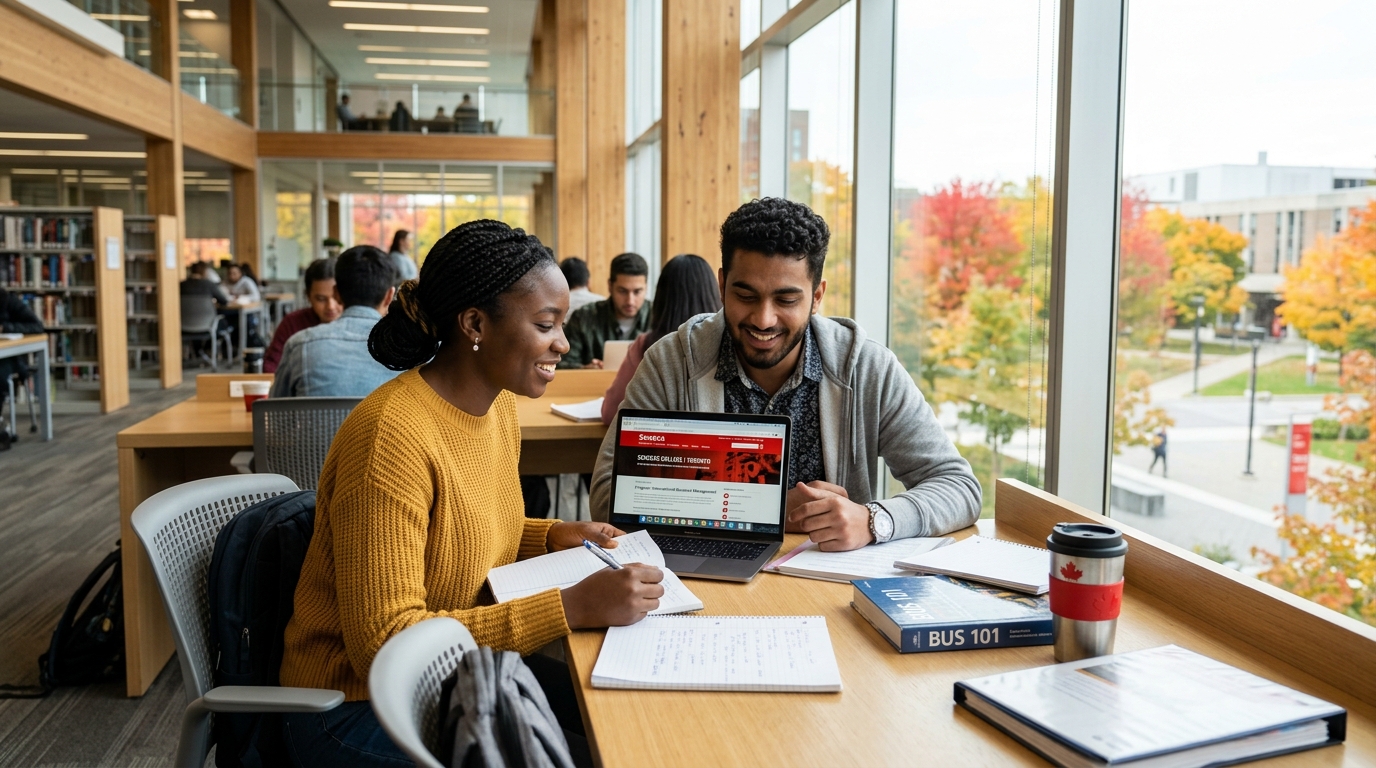
Yes — you can pursue a diploma in Canada without IELTS. More than eight Canadian colleges and universities accept alternative English proficiency evidence from international students, including TOEFL iBT, PTE Academic, CAEL, CELPIP, CanTEST, Cambridge C1/C2, and — for students who studied in English previously — a Medium of Instruction (MOI) letter from your institution. IELTS is one route, not the only route.
This guide covers everything you need to know about diploma courses in Canada for international students in 2026: the types of diploma available, the real cost figures sourced from Statistics Canada and EduCanada, which colleges accept alternatives to IELTS, how the one-year and two-year options differ, and what the Post-Graduation Work Permit (PGWP) means for your future in Canada. All data in this guide is verified from official Canadian government sources, Statistics Canada 2025-2026 data, and individual college admissions requirements.
Types of Diploma Courses in Canada for International Students
Canadian colleges offer three distinct diploma levels. The right one for you depends on your existing qualifications and career goals:
| Diploma Type | Duration | Who It’s For |
| Undergraduate Diploma / Certificate | 1–2 years | Students who have completed secondary school (Grade 12 or equivalent) and want practical vocational or career-focused training |
| One-Year Graduate Diploma | 1 year (2–3 semesters) | Students who already hold a bachelor’s degree and want to add a specialised Canadian credential in a specific field |
| Two-Year Graduate Diploma (PG Diploma) | 2 years (4–6 semesters) | Bachelor’s degree holders who want deeper specialisation and the maximum 3-year Post-Graduation Work Permit eligibility |
Graduate diplomas — both one-year and two-year — are the most popular choice for international students from Pakistan, India, Nigeria, and Bangladesh because they provide a recognised Canadian credential, qualify for the PGWP, and offer a direct pathway toward Canadian permanent residency through the Express Entry or Provincial Nominee Program.
Diploma in Canada Cost for International Students 2026
The diploma in canada cost for international students varies by province, institution, and programme level. These are verified figures from Statistics Canada 2025-2026 data and EduCanada (the official Government of Canada study information platform):
| Diploma Level | Annual Tuition (CAD) | Source |
| College Diploma Programs (general) | CAD $16,000 – $25,000/year | EduCanada / Statistics Canada 2025-26 |
| One-Year Graduate Diploma (PG) | CAD $10,000 – $15,000 | Multiple Canadian college fee schedules |
| Two-Year Graduate Diploma (PG) | CAD $13,000 – $17,000 | Multiple Canadian college fee schedules |
| Living Expenses (IRCC minimum) | CAD $22,895/year | IRCC — as of September 1, 2025 |
| Study Permit Fee | CAD $150 | IRCC current fee |
| PGWP Fee (after graduation) | CAD $255 (permit + open work fee) | IRCC current fee |
In addition to tuition, IRCC requires you to prove you have CAD $22,895 available for living expenses for the first year — not including tuition or travel. This is the minimum required amount as of September 1, 2025. Students arriving in Ontario must demonstrate slightly higher funds due to that province’s higher cost of living.
| 💡 Diploma vs Degree — The Cost Difference An undergraduate degree in Canada costs international students an average of CAD $41,746 per year (Statistics Canada 2025-2026). A college diploma programme costs CAD $16,000 to $25,000 per year — roughly half the price. For international students who need Canadian credentials and PGWP eligibility without the multi-year degree timeline, diplomas offer exceptional value. |
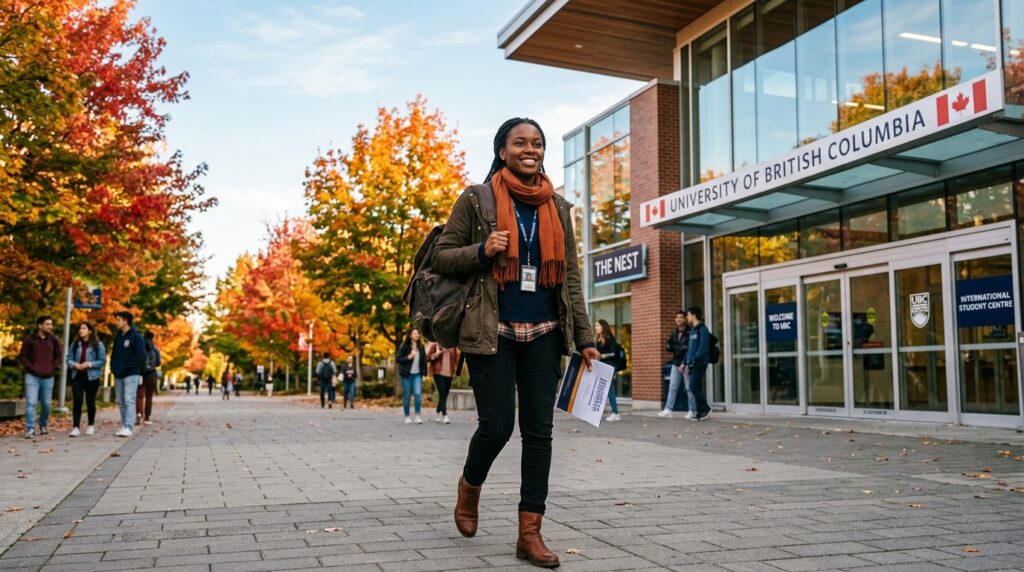
Diploma in Canada Without IELTS — How It Actually Works
The key point most guides miss: diploma without ielts in canada does not mean without any English proficiency evidence. Canada’s immigration rules require proof of English proficiency for a study permit. What the colleges on this page offer is the option to prove that proficiency through tests other than IELTS — or through an MOI letter if you previously studied in English.
Three Routes to a Canada Diploma Without IELTS
- Alternative English proficiency test: Take TOEFL iBT, PTE Academic, CAEL, CanTEST, CELPIP, or Cambridge C1 Advanced / C2 Proficiency instead of IELTS. These are fully accepted by both Canadian colleges and IRCC for study permit purposes.
- Medium of Instruction (MOI) letter: If your previous secondary or university education was taught entirely in English, your institution can issue an MOI letter on official letterhead signed by the registrar confirming this. Many Canadian colleges accept this as a direct IELTS waiver — without any test required at all.
- English pathway programme: Enrol in an EAP (English for Academic Purposes) or ESL programme at your chosen Canadian college first. On successful completion, you transition directly into your diploma programme with no IELTS score needed. Duration: 4 to 10 months depending on your current level.
| ⚠️ Critical 2026 Update — Duolingo NOT Accepted for PGWP Some colleges temporarily accepted the Duolingo English Test for admission. However, as of November 1, 2024, IRCC only accepts IELTS, CELPIP, PTE Core, TEF Canada, and TCF Canada for Post-Graduation Work Permit (PGWP) applications. If you use Duolingo for college admission but plan to apply for a PGWP after graduation, you must also meet the PGWP language requirement separately (CLB 7 for degrees, CLB 5 for diplomas). Confirm with your college and with IRCC before choosing your English test. |
Canadian Colleges That Accept Diploma Students Without IELTS 2026
Here are verified canada diploma without ielts options — colleges confirmed to accept alternative English proficiency evidence for their diploma and certificate programmes:
| College / University | Location | Alternatives Accepted | Notes |
| Cambrian College | Sudbury, Ontario | TOEFL iBT 80+ | PTE 58+ | Duolingo (check PGWP note) | EAPP pathway | Leading northern Ontario college; 80+ full-time diploma and certificate programmes |
| Seneca Polytechnic | Toronto, Ontario | TOEFL | PTE | CELPIP | CAEL | Cambridge C1/C2 | Large college with 150+ programmes in technology, business, health, and arts |
| University of Regina | Regina, Saskatchewan | CAEL 70 | TOEFL iBT 20+ | PTE 59 | CanTEST 4.5 | MELAB 80 | MOI letter | Public research university offering degree and diploma programmes |
| University of Saskatchewan | Saskatoon, Saskatchewan | TOEFL iBT | CanTEST | CAEL | PTE | CAE | MOI letter | 150+ fields of study; active international student recruitment from South Asia and Africa |
| University of Winnipeg | Winnipeg, Manitoba | TOEFL | Duolingo (check PGWP note) | CAE | CAEL | PTE | MOI letter | Accepts MOI letter for students from English-medium institutions |
| Concordia University | Montreal, Quebec | TOEFL 90 | PTE | CAEL | CAE C1 / CPE C2 | Young University Rankings — accepts wide range of alternatives |
| Algoma University | Sault Ste. Marie, Ontario | PTE | CAEL | TOEFL | ENG4U | Cambridge English | MOI letter | Considered among the most affordable universities in Canada for international students |
| Okanagan College | Kelowna, British Columbia | TOEFL | PTE | CAEL | CanTEST | MOI letter | BC’s Okanagan Valley; strong diploma and trade programmes |
| 📌 Always verify directly with the college English proficiency requirements are reviewed and updated annually by each institution. Before applying, check the current international admissions page of your chosen college. Requirements listed above are based on the most recently available published information — confirm with the admissions office before submitting your application. |

One Year Graduate Diploma in Canada — What to Expect
A one year graduate diploma canada is a postgraduate credential designed for students who already hold a bachelor’s degree from any country. It typically covers 2 to 3 semesters of coursework in a specific field — business, technology, healthcare, design, project management, data analytics, supply chain, and more — at a cost of approximately CAD $10,000 to $15,000 in tuition.
The one-year graduate diploma qualifies you for a Post-Graduation Work Permit (PGWP) of up to one year, provided the programme is at a Designated Learning Institution (DLI) and lasts at least eight months. During this time you can work in Canada in any field, which allows you to build Canadian work experience that strengthens future permanent residency applications through Express Entry. Students on a valid Canadian study permit can work up to 24 hours per week off-campus during academic sessions and full-time during scheduled breaks.
Two Year Graduate Diploma in Canada — PGWP and PR Benefits
A two year graduate diploma canada covers 4 to 6 semesters and typically costs CAD $13,000 to $17,000 per year. The most significant advantage over the one-year option is the PGWP duration: graduates of a two-year programme at a Canadian DLI qualify for a three-year Post-Graduation Work Permit — the maximum available at the diploma level.
Three years of Canadian work experience on a PGWP is a direct input into the Express Entry Canadian Experience Class (CEC) pathway to permanent residency. For international students from Pakistan, Nigeria, India, and Bangladesh who want to eventually settle in Canada, the two-year graduate diploma is the most strategically efficient credential available at this cost level. Total tuition for two years ranges from CAD $26,000 to $34,000 — compared to CAD $83,000+ for a two-year university Master’s degree.
Documents Required — Diploma Application in Canada
| Document Checklist — Diploma in Canada for International Students Valid Passport — minimum 6 months validity beyond intended course completion date Secondary School Transcripts — certified copies of your high school grades from all years completed English Proficiency Evidence — TOEFL iBT, PTE Academic, CAEL, CanTEST, CELPIP, Cambridge C1/C2, or Medium of Instruction letter from your previous institution (if taught in English) Letter of Acceptance — from the Designated Learning Institution (DLI) in Canada; required to apply for a study permit Proof of Funds — minimum CAD $22,895 for living expenses plus full first-year tuition plus travel costs (IRCC requirement as of September 2025) Provincial Attestation Letter (PAL) — most diploma students require a PAL from the province before IRCC processes their study permit; your college will guide you through obtaining it Study Permit Application — submitted online through the IRCC portal (ircc.canada.ca) after receiving your letter of acceptance Biometrics — required for most nationalities; fees CAD $85 for individuals; book appointment at a Visa Application Centre in your country |
Top 5 Tips for International Students Applying for a Diploma in Canada Without IELTS
- Check whether your previous education qualifies for an MOI letter first. If you completed your secondary school, bachelor’s degree, or any post-secondary education in English, contact your institution’s registrar and request a Medium of Instruction letter. This is the fastest and least expensive route to proving English proficiency for Canadian college admission — no test booking, no test fee, no waiting for results.
- Choose the right English test for both admission AND your future PGWP. If you plan to stay in Canada after graduation on a PGWP, choose an English test that satisfies both the college admission requirement AND the IRCC PGWP language requirement. IELTS Academic, CELPIP, and PTE Core satisfy both. Duolingo may satisfy college admission but does not satisfy PGWP language requirements as of November 2024. Check ircc.canada.ca for current PGWP language test requirements before booking your test.
- Select a two-year graduate diploma over a one-year if PGWP length matters. The difference between a one-year PGWP and a three-year PGWP is the difference between 12 months of Canadian work experience and 36 months — which is the difference between qualifying for Express Entry quickly or having to wait for another route. If you plan to pursue Canadian permanent residency, the two-year diploma adds roughly one year in study costs but three years of PGWP time.
- Get a Provincial Attestation Letter (PAL) through your college early. Since January 2024, most international diploma students require a PAL before IRCC will process their study permit. Your DLI (Designated Learning Institution) manages PAL allocation from the province — but allocations are limited. Confirm your PAL status with the college’s international admissions office as early as possible.
- Apply to multiple colleges simultaneously. Canadian college admissions are competitive and intake-specific. Applying to three or four colleges in the same programme area increases your chances of receiving an offer in time for your target September or January intake. Application fees are typically CAD $100 to $150 per institution — manageable when weighed against the cost of missing a full intake year.
Frequently Asked Questions — Diploma in Canada Without IELTS
Q1: Can I really get a diploma in Canada without IELTS?
Yes — multiple Canadian colleges accept alternative English proficiency tests including TOEFL iBT, PTE Academic, CAEL, CELPIP, CanTEST, and Cambridge C1/C2 in place of IELTS. Students who completed their previous education in English can also submit a Medium of Instruction (MOI) letter from their institution’s registrar as an IELTS waiver. Students who do not yet meet any English requirement can enroll in an English pathway (EAP/ESL) programme at a Canadian college first and transition into their diploma programme after 4 to 10 months.
Q2: What is the cost of a diploma in Canada for international students in 2026?
According to Statistics Canada and EduCanada official data for 2025-2026, college diploma programmes cost international students approximately CAD $16,000 to $25,000 per year in tuition. One-year graduate diploma programmes cost approximately CAD $10,000 to $15,000. Two-year graduate diploma programmes cost CAD $13,000 to $17,000 per year. In addition to tuition, IRCC requires proof of a minimum CAD $22,895 for living expenses for the first year.
Q3: Does a diploma in Canada qualify for a Post-Graduation Work Permit?
Yes, provided the diploma programme is at a Designated Learning Institution (DLI), is at least 8 months long, and is a full-time programme. A one-year diploma qualifies for a PGWP of up to one year. A two-year diploma qualifies for a PGWP of up to three years. PGWP applications must be filed within 180 days of receiving your final marks. As of November 2024, PGWP applicants must meet CLB 5 (diploma) or CLB 7 (degree) English language requirements using only IELTS, CELPIP, PTE Core, TEF Canada, or TCF Canada.
Q4: Which Canadian college is best for a diploma without IELTS?
There is no universally ‘best’ college — the right choice depends on your field of study, budget, and preferred city. Cambrian College in Sudbury accepts TOEFL and PTE and offers affordable diploma programmes in northern Ontario. Seneca Polytechnic in Toronto accepts multiple alternatives across 150+ programmes. University of Saskatchewan and University of Regina both accept MOI letters for students from English-medium institutions. Research the specific programme you want at each institution and contact the international admissions office directly to confirm current English proficiency requirements.
Q5: Is Duolingo accepted for Canadian college diploma admission?
Some Canadian colleges temporarily accepted Duolingo for admission, and a few still do. However, as of November 1, 2024, Duolingo is not accepted for PGWP applications by IRCC. This means if you use Duolingo for college admission, you will need to separately prove English proficiency using an IRCC-approved test (IELTS, CELPIP, PTE Core, TEF, or TCF) before applying for your PGWP after graduation. To avoid this complication, choose an English test that satisfies both your college’s admission requirement and IRCC’s PGWP requirement from the start.
Q6: Can I work while studying on a diploma programme in Canada?
Yes. International students on a valid Canadian study permit can work up to 24 hours per week off-campus during academic sessions and full-time during scheduled breaks (Christmas, spring, summer). This was increased from the previous 20-hour limit. Wages in Canada range from approximately CAD $15 to $18 per hour at typical student jobs — contributing CAD $960 to $1,600 per month toward living expenses. You cannot begin off-campus work until your studies have started.
Conclusion
A diploma in canada without ielts is a realistic, achievable goal in 2026. Eight or more Canadian colleges accept TOEFL, PTE, CAEL, MOI letters, and other IELTS alternatives for diploma programme admission. Costs range from CAD $10,000 to $25,000 per year in tuition — significantly lower than a university degree — while still qualifying graduates for the Post-Graduation Work Permit and a pathway toward Canadian permanent residency.
Two things matter most before you apply: choose an English test that satisfies both the college and IRCC’s PGWP requirements (not Duolingo for PGWP), and decide between the one-year and two-year graduate diploma based on your PGWP and PR goals. If you need two to three years of Canadian work experience for permanent residency, the two-year diploma is the better investment. If you only need a credential upgrade quickly, the one-year route is faster and cheaper.
Study Tribune publishes free, verified guides to studying and scholarships in Canada and around the world. Visit studytribune.com for the complete scholarships guide and subscribe to the newsletter for new opportunity alerts every week.