
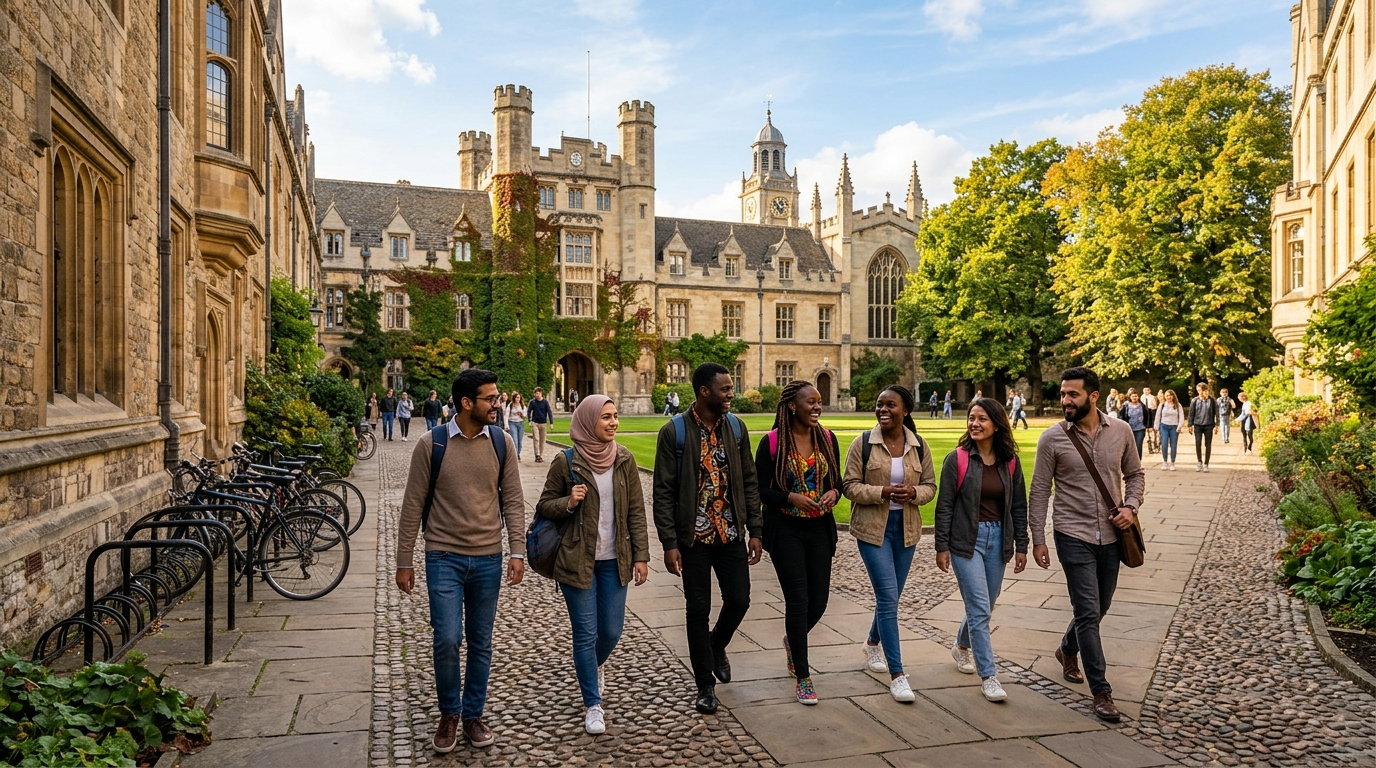
If you are looking for the best Europe scholarship for international students in 2026, you have come to the right place. Europe remains one of the most desirable study destinations in the world — home to 26 of the global top 200 universities, hundreds of English-taught degree programs, and some of the most generous government-funded scholarship programs available to students from developing countries. The good news is that many of these opportunities are fully funded, require no IELTS in several cases, and are actively seeking applicants from South Asia, Africa, and the Middle East.
This guide covers 15 proven, fully funded Europe scholarships for international students — organized by country, with eligibility requirements, benefits, deadlines, and direct application links for each. Whether you are a fresh bachelor’s graduate, a working professional looking for a master’s program, or a researcher pursuing a PhD, there is a European scholarship designed for you.
From the Netherlands Fellowship Programmes to the Stipendium Hungaricum in Hungary, from the Eiffel Excellence Scholarship in France to the Romanian Government Study Grants — every program listed here is official, verified, and currently active for the 2026 application cycle. Read through, bookmark the ones that match your profile, and start preparing your application today.
Why Choose Europe for Your Higher Education?
Europe is not just a collection of beautiful countries — it is a continent that takes higher education seriously and invests heavily in making it accessible to international talent. Here is why choosing a Europe scholarship for international students is one of the smartest academic decisions you can make:
- World-class universities — 26 European universities rank in the global top 200, including Oxford, Cambridge, ETH Zurich, and KU Leuven
- English-taught programs — thousands of master’s and PhD programs taught entirely in English, especially in the Netherlands, Germany, Denmark, and Norway
- Affordable or free tuition — countries like Germany, Norway, and France offer tuition-free education to international students, even without scholarships
- Schengen Zone access — study in one country, travel freely across 27 European nations on a single student visa
- Post-study work rights — most European countries allow international graduates to stay for 12–24 months after graduation to find employment
- Cultural diversity — Europe’s international student community spans 200+ countries, giving you a truly global academic experience
- Scholarship availability — European governments collectively offer thousands of fully funded scholarships annually, specifically targeting students from developing countries
What Do Europe Scholarships for International Students Cover?
The majority of government-funded European scholarships are comprehensive — meaning they go well beyond just covering tuition fees. Here is what a typical fully funded EU scholarship for international students includes:
| Scholarship Benefit | What It Covers |
| Tuition Fees | 100% of your university tuition — all years of the program |
| Monthly Stipend | Living allowance ranging from €700 to €1,400 per month depending on country |
| Accommodation | On-campus housing or a housing allowance |
| Round-Trip Airfare | Flight tickets from your home country to Europe and back |
| Health Insurance | Full medical coverage for the duration of your studies |
| Visa & Residence Permit | Application fees and paperwork assistance |
| Research Allowance | Additional grant for thesis research, conferences, and academic materials |
Not all scholarships cover every item above. Some programs like the Holland Scholarship offer a one-time payment, while others like Erasmus Mundus and Stipendium Hungaricum cover everything from day one to graduation. Each scholarship section below specifies exactly what is included.
1. Netherlands Scholarships for International Students 2026
The Netherlands is one of the most popular European study destinations for international students, offering a remarkable combination of world-class English-taught programs, a welcoming international community, and multiple dedicated funding programs. Scholarships in the Netherlands for international students are available for undergraduate, master’s, and PhD levels across dozens of participating universities.
Holland Scholarship
The Holland Scholarship is one of the most recognized scholarships in the Netherlands for international students. It is a joint initiative between the Dutch Ministry of Education, Culture and Science and a large number of Dutch universities.
| Detail | Information |
| Scholarship Value | €5,000 (one-time payment in the first year) |
| Degree Level | Bachelor’s or Master’s (first year only) |
| Eligible Countries | Students from outside the European Economic Area (EEA) |
| Eligible Universities | Over 50 participating Dutch universities |
| Deadline | January – April 2026 (varies by university) |
| Official Site | studyinholland.nl |
The Holland Scholarship does not cover full tuition but provides a significant financial boost to help offset your first year of study costs. Many recipients combine it with their university’s own scholarship programs for additional support.
Netherlands Fellowship Programmes (NFP)
The Netherlands Fellowship Programmes, funded by the Dutch Ministry of Foreign Affairs, are targeted at mid-career professionals from 51 priority countries including Pakistan, Nigeria, Bangladesh, Ghana, Kenya, Ethiopia, and many others. If you are from any of these countries and have at least two years of professional work experience, the NFP is a powerful funding route for a master’s or PhD in the Netherlands.
- Covers: full tuition, monthly stipend, travel, accommodation, insurance
- Degree Level: short courses, master’s, and PhD programs
- Target: working professionals from 51 eligible countries
- Application: through NFP-affiliated institutions in your home country
Orange Tulip Scholarship
The Orange Tulip Scholarship is a partnership between the Dutch government and the private sector, offering full or partial scholarships to students from specific countries including China, India, Indonesia, Russia, South Korea, and Vietnam. If your country is on the eligible list, this scholarship can cover tuition fees at participating universities in the Netherlands.
Key tip: Netherlands scholarships for international students are university-managed, so always check your specific university’s scholarship portal in addition to the national programs listed above.
2. France Scholarship for International Students 2026
France has long positioned itself as a destination for international academic talent. The French government’s commitment to global scholarship programs makes France scholarship for international students one of the most sought-after routes to study at institutions like Sciences Po, Sorbonne, and the top Grandes Écoles. Even better, public universities in France charge very low tuition fees — meaning scholarship funds stretch much further than in the UK or USA.
Eiffel Excellence Scholarship Program
The Eiffel Excellence Scholarship is France’s flagship international scholarship, funded by the Ministry of Europe and Foreign Affairs. It is specifically designed to attract outstanding international students to French higher education institutions at the master’s and PhD levels.
| Detail | Information |
| Monthly Stipend (Master’s) | €1,181 per month |
| Monthly Stipend (PhD) | €1,400 per month |
| Additional Benefits | Round-trip airfare, health insurance, cultural activities allowance |
| Eligible Fields | Engineering, sciences, economics, law, political science, medicine |
| Number of Scholarships | Approximately 500 per year |
| Who Applies | The French university applies on your behalf — you must first be accepted |
| Target Countries | All nationalities — priority given to Asia, Americas, Middle East, Europe |
| Deadline | January 2026 (applications via French universities) |
The critical thing to understand about the Eiffel Scholarship is that you do not apply directly. You must first secure admission at a participating French institution, and then the institution nominates you for the Eiffel Scholarship. This means your first step is a strong application to the French university of your choice.
French Government Scholarship (BGF)
Beyond the Eiffel program, the French embassy in your home country may offer bilateral government scholarships (Bourse du Gouvernement Français — BGF) to students from specific countries. These cover tuition, monthly allowance, and sometimes accommodation. Check the French embassy website in your country for the current 2026 BGF program details, as eligibility and values vary by country.

3. Belgium Scholarships for International Students 2026
Belgium is home to some of Europe’s finest research universities — KU Leuven, Ghent University, Université catholique de Louvain — and consistently ranks among the top destinations for international scholarship holders. Scholarships in Belgium for international students are primarily government-funded through two flagship programs with a strong focus on students from developing countries.
VLIR-UOS Scholarships
The VLIR-UOS Scholarships are funded by the Belgian Development Cooperation and administered by VLIR-UOS (Flemish Interuniversity Council for University Development Cooperation). This is arguably the best scholarships in Belgium for international students from developing countries because it is comprehensive and specifically targeted at students from Africa, Asia, and Latin America.
| Detail | Information |
| Coverage | Full tuition + monthly allowance + housing + travel + health insurance |
| Degree Level | Master’s and short training programs |
| Target Countries | 32 specific developing countries in Africa, Asia, Latin America |
| Duration | 11 months to 2 years depending on the program |
| Eligible Countries (Sample) | Pakistan, Bangladesh, Ethiopia, Uganda, DR Congo, Bolivia, Vietnam, Cambodia |
| Application | Through specific VLIR-UOS partner programs — not all Belgian universities |
| Deadline | February 2026 (varies by program) |
One important note: VLIR-UOS requires that applicants must return to their home country after completing the scholarship. This is a development-focused program, not an immigration pathway. Applicants who demonstrate a clear plan to use their education back home are strongly preferred.
WBI World Excellence Scholarships
The Wallonia-Brussels International (WBI) World Excellence Scholarships are offered by the French-speaking community of Belgium and target students from outside Belgium who wish to pursue excellence-based master’s or postdoctoral research at French-language Belgian universities including UCLouvain, ULiège, and ULB. The scholarship covers tuition, a monthly stipend of approximately €850–€1,000, and health insurance.
4. Romania Government Scholarship for International Students 2026
Romania may not be the first country that comes to mind when thinking about European scholarships, but it offers one of the most accessible and consistently available government scholarship programs on the continent. The Romania Government Scholarship is funded by the Romanian Ministry of Foreign Affairs and has been running for decades, making it a reliable annual opportunity for international students.
Romanian Government Study Grants
The Romanian Government Study Grants program offers free places — including tuition waiver, free accommodation in student dormitories, and a monthly stipend — to international students from countries that have diplomatic relations with Romania. This makes scholarships in Romania available to students from virtually every part of the world, including all South Asian and African nations.
| Detail | Information |
| Degree Level | Undergraduate (bachelor’s), Master’s, PhD, and Medical programs |
| Tuition | Full waiver — no tuition fee charged |
| Accommodation | Free place in student dormitory |
| Monthly Stipend | Approximately 65–85 EUR/month (basic living support) |
| Health Care | Provided through Romanian health system |
| Language of Instruction | Romanian — preparatory language year included in the scholarship |
| Top Universities | University of Bucharest, Babes-Bolyai University, Alexandru Ioan Cuza |
| Application | Through Romanian embassies in your home country |
| Deadline | March–April 2026 |
The Romania government scholarship is particularly popular for medical degrees — Romania’s medical universities are accredited across the EU and internationally, and graduates can practice across Europe after completing their licensing. For students who want a fully funded European medical degree, this is one of the best-kept secrets in international scholarship circles.
One thing to prepare for: the instruction language is Romanian, and scholarship holders complete a preparatory language year in Romanian before beginning their degree programs. The language year itself is also fully covered.
5. Scholarships in Denmark for International Students 2026
Denmark consistently ranks among the world’s happiest countries and its universities are globally respected for research output and teaching quality. The Technical University of Denmark (DTU), University of Copenhagen, and Aarhus University attract thousands of international scholarship applicants each year. Denmark scholarships for international students are primarily university-based, as Denmark does not currently run a national government scholarship scheme like some other European countries — but university funding is generous and highly competitive.
Danish Government Scholarship (Bilateral Programs)
While Denmark ended its broad international scholarship scheme, specific bilateral agreements with select countries remain active. Students from countries with active cultural agreements with Denmark should check their home country’s Danish embassy for any bilateral 2026 opportunities.
Danish University Scholarships
Most Denmark scholarship opportunities for international students come through the universities themselves:
- University of Copenhagen — offers merit-based waivers and scholarships for non-EU master’s students, particularly in STEM, social sciences, and law
- Aarhus University — merit scholarships covering full or partial tuition for exceptional applicants from outside the EU/EEA
- Technical University of Denmark (DTU) — provides scholarship positions linked to specific research projects, often advertised alongside PhD vacancies
- Copenhagen Business School (CBS) — CBS scholarships and tuition reductions for admitted non-EU master’s applicants with outstanding academic records
A scholarship in Denmark for international students typically reduces or fully waives the tuition fee for non-EU students (which can be DKK 90,000–150,000 per year without scholarship). Monthly living costs in Denmark are high (approximately DKK 8,000–10,000 per month), so some students combine a tuition waiver with a part-time work authorization.
6. Norway Scholarships for International Students 2026
Norway is one of the most attractive European study destinations for a straightforward reason: public universities in Norway charge no tuition fees to any student — domestic or international. This means that even without a dedicated scholarship, studying in Norway costs only your living expenses. Norway scholarships for international students therefore focus on covering living costs, research funding, and travel — since tuition is already free.
NORPART — Norway Partnerships Programme
NORPART (Norway Partnerships Programme for Global Education and Research) is the Norwegian government’s primary mechanism for funding international student and researcher mobility. NORPART grants are given to Norwegian universities and their international partners to create exchange opportunities. If your home institution has a NORPART partner agreement with a Norwegian university, you may qualify for a fully funded exchange fellowship.
| Detail | Information |
| Administered by | Norwegian Agency for Exchange Cooperation (Diku) |
| Target | Students at universities with active NORPART partner agreements |
| Funding | Monthly stipend + travel grant (tuition already free at Norwegian universities) |
| Degree Level | Bachelor’s, Master’s, PhD exchange mobility |
| Priority Regions | Sub-Saharan Africa, South/Southeast Asia, Western Balkans, South America |
Norwegian University Scholarships
Several Norwegian universities offer their own scholarship funds for outstanding international applicants:
- University of Oslo — the Oslo Scholarship for international students provides monthly living stipends for admitted non-EEA students in select programs
- NTNU (Norwegian University of Science and Technology) — NTNU International Scholarship for select master’s programs, particularly in technology and natural sciences
- University of Bergen — merit-based scholarships administered through the university’s international office
Living in Norway is expensive (approximately NOK 12,000–15,000 per month in Oslo), so securing a stipend alongside the tuition-free benefit is strongly recommended. Norway scholarships for international students are competitive — strong academic records and clear research goals significantly improve your chances.

7. Hungary Scholarship 2026 — Stipendium Hungaricum (Fully Funded)
The Stipendium Hungaricum is one of the most competitive, most generous, and most popular Europe scholarships for international students available today. Funded by the Hungarian government and managed by Tempus Public Foundation, this scholarship has grown from a small pilot to one of Europe’s largest scholarship programs, awarding over 6,000 places annually across 31 partner countries.
The Hungary scholarship under Stipendium Hungaricum is a genuinely comprehensive, fully funded opportunity. Here is exactly what it covers:
| Benefit | Details |
| Tuition Fees | 100% waiver — full program duration |
| Accommodation | Free dormitory accommodation or HUF 40,000/month housing allowance |
| Monthly Stipend (Bachelor’s) | HUF 43,700/month (~€110) |
| Monthly Stipend (Master’s) | HUF 43,700/month (~€110) |
| Monthly Stipend (PhD) | HUF 140,000/month (~€360) |
| Health Insurance | Hungarian state health care for the full program |
| Degree Levels | Bachelor’s, One-Tier Master’s, Master’s, PhD, Doctoral |
| Language of Study | English and Hungarian programs available |
| Partner Countries | 31 countries across Africa, Asia, South America, Middle East |
| Eligible Countries (Sample) | Pakistan, Nigeria, Bangladesh, Kenya, Ethiopia, Egypt, Jordan |
| Application Portal | Stipendium.hu |
| Typical Deadline | January 15 – February 15, 2026 |
The application process for the Stipendium Hungaricum involves two stages: you first apply on the Stipendium Hungaricum portal, and then you are also required to apply directly to Hungarian universities of your choice. Many universities accept applicants without IELTS if you can demonstrate English proficiency through other means (such as medium of instruction certificates from an English-taught undergraduate degree).
Top Hungarian universities accepting Stipendium Hungaricum applicants include the University of Debrecen, Budapest University of Technology and Economics, Corvinus University of Budapest, Eötvös Loránd University (ELTE), and the University of Pécs. Engineering, medicine, business, and information technology programs are particularly popular among international applicants.
| 📌 Key Tip for Hungary Scholarship Applicants Apply to 3–5 universities simultaneously on the Stipendium Hungaricum portal. State clearly in your motivation letter how your studies in Hungary will benefit your home country. Stipendium Hungaricum prioritizes applicants who plan to return and contribute to their home country. Medical programs (MBBS/MD) are extremely popular — apply early and prepare strong academic transcripts. |
8. Sweden Scholarships for International Students 2026
Sweden is home to some of the world’s most innovative universities — Stockholm University, Uppsala University, KTH Royal Institute of Technology, and Lund University — and offers several well-funded scholarship routes for international students from outside the European Economic Area.
Swedish Institute Scholarships for Global Professionals (SISGP)
The Swedish Institute Scholarship for Global Professionals is Sweden’s most prestigious scholarship for international students from developing countries pursuing a master’s degree at a Swedish university.
| Detail | Information |
| Tuition Coverage | 100% of tuition fees |
| Monthly Living Grant | SEK 11,000/month (approximately €950/month) |
| Travel Grant | Return airfare to Sweden |
| Insurance | Health and accident insurance |
| Leadership Training | Special leadership program and networking events |
| Target Countries | Eligible country list — includes Pakistan, Nigeria, Bangladesh, Ghana, Uganda, Ethiopia |
| Study Level | Master’s degree programs (one or two years) |
| Deadline | February 2026 |
The Swedish Institute Scholarship is highly competitive — only a few hundred awards are made globally each year. The selection process evaluates academic merit, professional experience, leadership potential, and the applicant’s plan to contribute to their home country’s development after graduation. Students with 2–5 years of relevant professional experience after their bachelor’s degree are the strongest candidates.
9. Swiss Government Excellence Scholarships 2026
Switzerland’s scholarship program is unique — it is targeted at postgraduate students and researchers rather than bachelor’s or even master’s students. If you already have a master’s degree and want to pursue doctoral or postdoctoral research at one of Switzerland’s world-class institutions (ETH Zurich, EPFL Lausanne, University of Zurich), the Swiss Government Excellence Scholarship is your entry point.
| Type | Government Excellence Scholarship |
| Offered By | Swiss Federal Commission for Scholarships for Foreign Students (FCS) |
| Degree Level | PhD and Postdoctoral Research |
| Coverage | Full tuition + monthly stipend (~CHF 1,920/month) + health insurance + accommodation allowance |
| Duration | 9 months (postdoc) to 3 years (PhD) |
| Selection | Applications go through Swiss embassies in your home country |
| Deadline | November 2025 – February 2026 (varies by country) |
| Key Universities | ETH Zurich, EPFL, University of Bern, University of Geneva |
The Swiss Government Excellence Scholarship is administered through Swiss embassies and consulates worldwide. Contact your nearest Swiss diplomatic mission for country-specific guidelines and deadlines, as they vary significantly between countries.
10. Erasmus Mundus Scholarships 2026 — Study in Multiple EU Countries
The Erasmus Mundus Joint Masters (EMJM) program is unlike any other European scholarship — it allows you to study across two or three different European countries within a single degree program. Funded by the European Union under the Erasmus+ program, it is one of the most prestigious Europe scholarships for international students and is available to applicants from all over the world.
What Makes Erasmus Mundus Unique?
- You study at two or three partner universities in different EU countries within one master’s degree
- All expenses are covered — tuition, travel, accommodation, and a generous monthly stipend
- You graduate with a joint or double degree from multiple European universities
- Open to all nationalities — no country restrictions for the main scholarship track
- 100+ different joint master’s programs available across virtually every academic field
| Benefit | Amount/Detail |
| Monthly Stipend | €1,400/month for the full program duration |
| Travel Contribution | €2,000–€4,000 depending on home country |
| Tuition Fees | 100% covered — all partner universities |
| Program Duration | 12 to 24 months |
| Available Programs | 130+ joint master’s programs across all disciplines |
| Who Can Apply | All nationalities — open worldwide |
| How to Apply | Directly to individual Erasmus Mundus programs (each has its own portal) |
Finding the right Erasmus Mundus program for your field is the first step. The European Commission maintains a complete database of all currently open EMJM programs at eacea.ec.europa.eu. Search by your field of study, filter for programs with current scholarship calls, and apply directly through each program’s official website.

11. Germany DAAD Scholarships 2026
Germany is Europe’s most popular study destination for international students after the UK, and the DAAD (German Academic Exchange Service) is the world’s largest scholarship organization. Public universities in Germany charge minimal semester fees (typically €150–€350 per semester) and the DAAD provides tens of thousands of scholarships at all degree levels.
- DAAD Scholarship for Development-Related Postgraduate Courses — full scholarship for master’s students from developing countries in development-relevant fields
- Helmut Schmidt Programme — master’s scholarships for future leaders from developing and transition countries
- DAAD Research Internships in Science and Engineering (RISE) — for undergraduate students from North America and Europe, but increasingly open globally
- University-Specific DAAD Scholarships — partnered with hundreds of German universities offering DAAD-funded research and teaching positions
Germany’s combination of near-zero tuition, strong engineering and science programs, and comprehensive DAAD funding makes it a top choice for international students across all academic levels.
12. Austria and Ireland Scholarships 2026
Austrian Government Scholarship (OeAD)
The Austrian Agency for Education and Internationalisation (OeAD) manages Austria’s government scholarship program for international students. Scholarships are available for master’s, PhD, and postdoctoral research at Austrian universities including the University of Vienna, TU Wien, and Graz University of Technology. Monthly grants range from €1,050 to €1,350 depending on the study level, and the selection is based on both academic merit and the relevance of your research to Austria’s academic priorities.
Government of Ireland Scholarships
The Government of Ireland International Education Scholarships — funded by the Irish Department of Further and Higher Education — offer 60 full scholarships per year to citizens of non-EU/EEA countries for undergraduate or postgraduate study at Irish universities including Trinity College Dublin, University College Dublin, and NUI Galway. Each scholarship covers full tuition plus a living stipend of €10,000 per year. The program is highly competitive and requires outstanding academic achievement.
13. Italy and Spain Scholarships 2026
Italian Government Scholarships for Foreign Students
The Italian Ministry of Foreign Affairs offers annual scholarships for international students to study undergraduate, master’s, and PhD programs at Italian public universities. Scholarships cover tuition exemption, accommodation assistance, and a monthly stipend of approximately €900. Programs are available in Italian (with a preparatory language year included) and increasingly in English, particularly at Politecnico di Milano and Bocconi University.
Spain Government Scholarships — MAEC-AECID
The Spanish Agency for International Development Cooperation (AECID) offers scholarships for students from Latin America, the Mediterranean, sub-Saharan Africa, and Asia to pursue postgraduate study and research in Spain. The MAEC-AECID scholarship covers tuition, monthly allowance, and accommodation at Spanish universities including Complutense Madrid, University of Barcelona, and University of Salamanca.
14. EU Scholarship for International Students — Horizon Europe and Marie Curie
Beyond country-specific programs, the European Union funds two major research-focused scholarship programs that are open to international students from all non-EU countries:
Marie Skłodowska-Curie Actions (MSCA)
The MSCA Doctoral Fellowships are the EU’s flagship program for PhD researchers. Funded through Horizon Europe, MSCA offers generous three-year PhD funding of approximately €3,400–€4,500/month (including living allowance, mobility allowance, and family allowance if applicable). These positions are advertised individually at European universities and research centres — search the EURAXESS portal for current openings.
Horizon Europe Research Grants
For postdoctoral researchers and senior academics, Horizon Europe European Research Council (ERC) grants provide funding for research projects hosted at European institutions. While these are project-based rather than traditional scholarships, they represent the highest level of EU scholarship for international students entering the research career pipeline.
15. How to Apply for European Scholarships — Step by Step
Applying for a Europe scholarship for international students can feel overwhelming, but the process follows a consistent pattern across most programs. Here is a step-by-step approach that works for virtually every program covered in this guide:
- Research and shortlist — Start 9–12 months before your intended start date. Shortlist 3–5 scholarships that match your academic level, field of study, and country of origin. Use StudyTribune’s scholarship database to cross-reference eligibility.
- Check the exact eligibility criteria — Read the official scholarship guidelines carefully. Many programs have age limits, GPA minimums, or work experience requirements. Confirm you qualify before investing time in the application.
- Contact your home country’s embassy — For government-to-government scholarships (Romania, Hungary, France BGF), the application goes through the relevant embassy in your country, not directly to the university. Visit the embassy or check their website for country-specific instructions.
- Prepare your documents — Most European scholarship applications require a standard set of documents (see full checklist below). Start gathering them at least 3 months early.
- Write your motivation letter — This is the most important part of your application. Tailor it specifically to each scholarship — generic letters are rejected. Explain why this country, why this program, and what you will do with your education after graduating.
- Secure your letters of recommendation — Contact your referees at least 6–8 weeks before the deadline. Brief them on what to emphasize and provide them with your CV and the scholarship requirements.
- Submit your application — Apply before the deadline. Many scholarship portals close exactly at midnight on the deadline date with no late submissions accepted.
- Follow up — After submission, check your email daily. Many programs conduct interviews 4–8 weeks after the application deadline.
Documents Required for Europe Scholarship Applications
While each scholarship has its own specific requirements, here is a master checklist that covers documents needed across the programs featured in this guide:
| 📋 Standard Document Checklist for European Scholarship Applications ✅ Academic Transcripts — certified/attested copies from all universities attended ✅ Degree Certificates — bachelor’s and/or master’s degree certificates (if applicable) ✅ Valid Passport — minimum 18 months validity beyond your intended study period ✅ Motivation/Personal Statement Letter — 500–1,000 words, tailored to each scholarship ✅ Curriculum Vitae (CV) — academic and professional experience, Europass format preferred ✅ Letters of Recommendation — 2–3 academic or professional references ✅ Research Proposal — required for PhD and research-focused scholarships ✅ Language Certificate — IELTS, TOEFL, or medium of instruction certificate for English programs ✅ Passport-size Photographs — typically 2–4 recent photos ✅ Proof of Work Experience — where required (especially for VLIR-UOS, NFP, Swedish Institute) ✅ Health Certificate — basic medical fitness certificate for some programs ✅ Application Form — specific to each scholarship portal |

Top 8 Tips to Win European Scholarships in 2026
Thousands of international students apply for the same scholarships. Here is what separates successful applicants from the rest:
- Start early — The best candidates begin preparing 12 months before the deadline. Scholarship documents, language tests, and recommendation letters all take time. Last-minute applications are almost always weaker applications.
- Tailor every motivation letter — The single most common reason applications fail is a generic motivation letter. Each scholarship selection committee can tell immediately when a letter was copied from a template. Write specifically about why Hungary, why France, why this university — and connect it directly to your career goals.
- Match your field to the scholarship’s priorities — Many European scholarships prioritize specific academic fields. VLIR-UOS focuses on development-related fields. Eiffel targets engineering, sciences, and political science. Apply to scholarships where your field is listed as a priority.
- Demonstrate impact back home — Government-funded scholarships in Europe almost universally want to see that you will use your education to contribute to your home country’s development. Build this narrative clearly into your motivation letter and research proposal.
- Get your language certificate done first — IELTS, TOEFL, or a medium of instruction letter. Do not wait until the last month. Book your test 3–4 months before the scholarship deadline.
- Apply to multiple scholarships simultaneously — Apply to at least 3–4 programs in the same cycle. Different scholarships have different deadlines, eligibility criteria, and selection factors. Spreading your applications multiplies your chances.
- Connect with previous scholarship holders — Join Facebook groups, LinkedIn communities, and university forums for scholarship recipients. Previous holders often share insider information about what selection committees value most.
- Know your backup — Even if your scholarship application is unsuccessful, confirm whether the university offers its own tuition waivers or funding for admitted students. Many European universities have separate institutional scholarships that do not require a government scholarship application.
Frequently Asked Questions — Europe Scholarships for International Students
Q1: Can I apply for a Europe scholarship without IELTS?
Yes. Many European countries do not require IELTS as a condition for scholarship eligibility. Countries like Germany, Norway, and the Netherlands frequently accept medium of instruction certificates as proof of English proficiency. Hungary’s Stipendium Hungaricum also accepts language certificates issued by your university. Always check the specific language requirements of each scholarship program.
Q2: Which European scholarship is easiest to get for international students?
Relative ease depends on your academic profile and country of origin. The Romanian Government Scholarship and Stipendium Hungaricum Hungary Scholarship are generally considered more accessible than highly competitive programs like Erasmus Mundus or the Swedish Institute Scholarship. Both Romania and Hungary actively recruit from South Asia and Africa, and the selection is merit-based but not as fiercely competitive as Western European programs.
Q3: Can Pakistani students apply for Europe scholarships?
Absolutely. Pakistan is an eligible country for most major European scholarship programs including Stipendium Hungaricum Hungary, Romanian Government Scholarships, VLIR-UOS Belgium, Netherlands Fellowship Programmes, Swedish Institute Scholarships, and Erasmus Mundus. Pakistani students are among the most active applicants for European scholarships globally.
Q4: Do I need a job offer to apply for European scholarships?
No. Most Europe scholarships for international students are for full-time academic study — they are not work visas. However, some programs like the Netherlands Fellowship Programmes (NFP) and the Swedish Institute Scholarship require applicants to have prior work experience in their field. Check the specific eligibility requirements of each program.
Q5: How do I find out if my country is eligible for a specific scholarship?
Every scholarship listed in this guide links to its official website, where an up-to-date list of eligible countries is published. For government-to-government scholarships like Romania and Hungary, your country’s eligibility is determined by the bilateral agreement between your home government and the host country’s government. In most cases, if your country has diplomatic relations with the European country, you are likely eligible.
Q6: Can I apply for multiple European scholarships at the same time?
Yes, you can and should apply for multiple scholarships simultaneously. There is no rule against it, and applying to 3–5 programs at once is standard practice among successful international scholarship applicants. If you receive multiple offers, you can then decide which to accept. Be transparent with each institution if you receive offers from more than one.
Q7: What is the best European country to study in for international students?
There is no single best answer — it depends entirely on your field, language preference, budget, and career goals. For engineering and technology: Germany and the Netherlands. For business: France, Netherlands, and Switzerland. For medicine: Romania and Hungary. For research: Sweden, Norway, and Switzerland. For accessibility and funding availability: Hungary and Romania consistently appear in top choices for students from developing countries.
Q8: When do European scholarship applications open in 2026?
Most European scholarships for the 2026 academic year follow this general timeline: Erasmus Mundus programs open October–November 2025; Stipendium Hungaricum opens December 2025 with a January 2026 deadline; Eiffel Scholarship nominations are due January 2026; VLIR-UOS Belgium closes February 2026; Swedish Institute Scholarship closes February 2026; Romanian Government Scholarships open March–April 2026. Always check official websites for exact current dates.
Conclusion — Your Europe Scholarship Journey Starts Now
Europe is not just an academic destination — it is a life-changing opportunity. The 15 Europe scholarships for international students featured in this guide represent real, funded, currently active programs that accept applications from students in South Asia, Africa, the Middle East, and beyond. From the comprehensive Stipendium Hungaricum in Hungary to the prestigious Erasmus Mundus program spanning multiple EU countries, from free tuition in Norway to fully funded master’s programs in France, Belgium, and the Netherlands — the opportunities are real, the funding is genuine, and the doors are open.
The students who win these scholarships are not necessarily the most brilliant in the world. They are the ones who started preparing early, matched themselves carefully to the right programs, wrote compelling motivation letters, and applied to multiple opportunities simultaneously. That is a process, not a miracle — and it is one you can follow.
Bookmark this page. Check back for annual updates. Subscribe to Study Tribune’s newsletter to receive deadline alerts as they open. And if you found this guide helpful, share it with a fellow student who is looking for their own path to study in Europe on a scholarship.
Study Tribune — Your Trusted Source for Europe Scholarships and Global Academic Funding Opportunities